Bathroom Remodeling Ideas & Cost Ranges
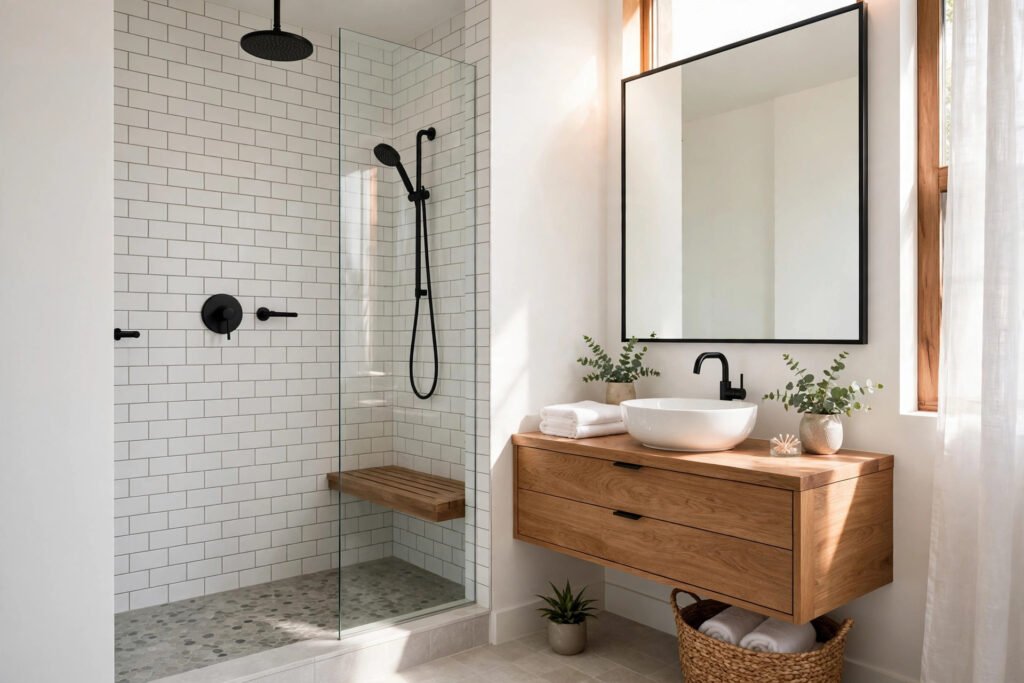
Start with what annoys you most: low water pressure, a leaking faucet/tap, mouldy grout, or no storage. Fixing those first gives a better result than picking tiles before you know the plumbing is sound.
Waterproofing is the part you never see and must never skip. Tanking (waterproof membrane) behind showers and around baths protects the structure below. This is one job where cutting corners costs far more later.
What This Hub Covers
- Small-bathroom layouts that make a tight room feel bigger
- Walk-in showers, bath-to-shower conversions, and wet-room basics
- Vanities, toilets, and faucet/tap swaps you can do yourself
- Tile choices, grout care, and how to stop mould coming back
- Storage ideas: recessed niches, mirrored cabinets, and over-toilet shelving
Planning Your Budget
Costs vary a lot by region and city — labour rates in London or Sydney are not the same as in a small US town, and material prices shift with supply. Treat every range on this site as a planning starting point, then get two or three local quotes before you commit.
Guides in This Hub
Related Hubs
Common Questions
What is the most expensive part of a bathroom remodel?
Labour and plumbing work, followed by tile and fixtures. Moving a toilet or shower drain is the fastest way to push the price up, since it means reworking pipes under the floor.
Can I remodel a small bathroom on a tight budget?
Yes. Paint, a new mirror, updated hardware, a modern faucet/tap, and re-grouting or re-caulking can transform a bathroom without touching the plumbing. Keep the layout and the savings follow.
How do I stop mould in my bathroom?
Ventilation is the fix that matters most: an extractor fan that vents outside (not into the attic/loft), used during and after showers, plus wiping down grout lines. Bleach hides mould; dry air stops it.
Do I need a permit for a bathroom remodel?
Swapping like-for-like fixtures and repainting usually needs no permit. Moving plumbing, adding circuits, or changing the structure does — check your local rules first.
Shower or bath — which is better for resale?
Most buyers want at least one bath in the home, especially families. If you have only one bathroom, keeping a bath is usually the safer choice; a second bathroom converts well to a shower.