Outdoor & Garden DIY Ideas
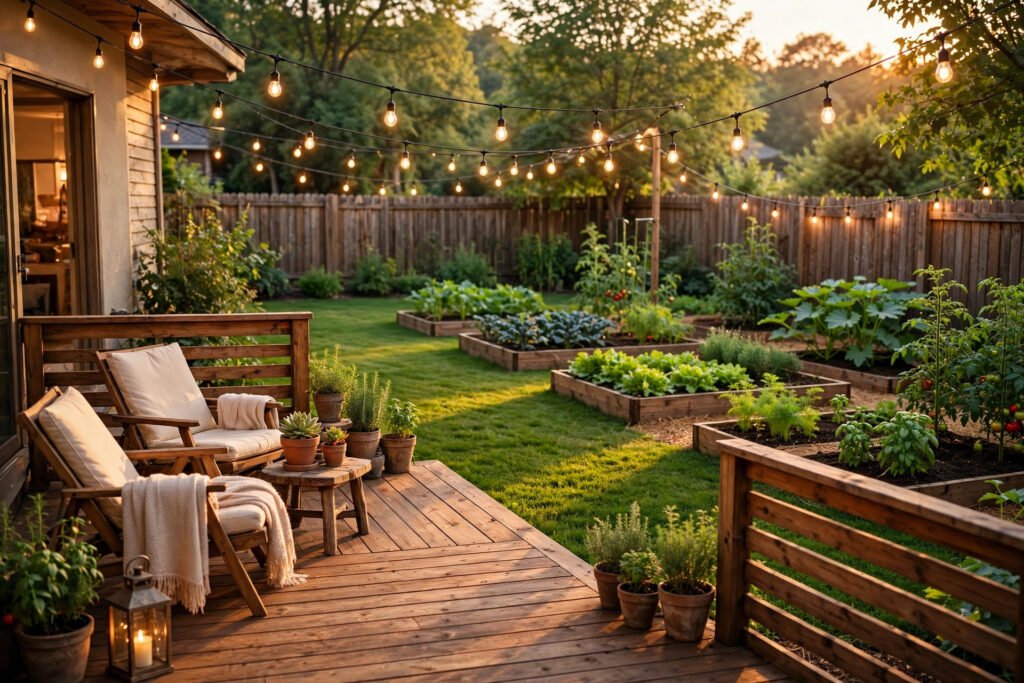
Choose plants and materials for your climate, not for a photo. What thrives in a mild UK garden may fry in an Australian summer or freeze in a Canadian winter. Local nurseries stock what survives locally — that is free, expert advice.
For decks, check local rules before building: height, distance from boundaries, and railing requirements differ by area, and some decks need permits. The same applies to fences, sheds, and garden structures.
What This Hub Covers
- Deck builds: timber vs composite, footings, and board spacing basics
- Patios and paths: slabs, pavers, gravel, and drainage that actually works
- Lawn care by season: mowing height, feeding, overseeding, and watering
- Raised beds and vegetable gardens: soil, sun, and watering that suits your climate
- Outdoor lighting: solar vs wired, safety, and making a small garden feel bigger
Planning Your Budget
Costs vary a lot by region and city — labour rates in London or Sydney are not the same as in a small US town, and material prices shift with supply. Treat every range on this site as a planning starting point, then get two or three local quotes before you commit.
Guides in This Hub
Related Hubs
Common Questions
Do I need a permit to build a deck?
It depends on height, size, and location, and rules differ by city and country. Low ground-level decks often need no permit; raised decks with railings often do. Check with your local building authority before buying timber.
Timber or composite decking — which is better?
Timber costs less up front and looks natural, but needs regular oiling or staining. Composite costs more, needs little upkeep, and can get hot in direct sun. Pick based on how much maintenance you will actually do.
How do I fix a patchy lawn?
Mow at the right height (never cut more than a third at once), feed in the growing season, overseed thin patches, and water deeply but less often. Most patchy lawns suffer from compaction and shallow watering, not disease.
What is the easiest vegetable garden for a beginner?
Raised beds with good soil, in the sunniest spot you have. Start with forgiving crops for your climate — salad leaves, herbs, beans, and courgettes/zucchini are reliable first wins.
Is solar garden lighting worth it?
For paths and decoration, yes — cheap, easy, and no wiring. For security or bright task lighting, wired low-voltage lights are brighter and work on cloudy days and in winter.